
Key Facts
Benign Growth Removal: At a Glance
What does Benign Growth Removal treat?
- Seborrheic keratoses, dermatofibromas, skin tags, warts, and other benign lesions.
How does Benign Growth Removal work?
- Cryotherapy, shave excision, or electrodesiccation depending on lesion type.
How long is a Benign Growth Removal session?
- 15–30 minutes
What is the downtime after Benign Growth Removal?
- Minimal; crust falls off in 7–14 days.
When will I see results from Benign Growth Removal?
- Complete healing within 2–3 weeks.
How much does Benign Growth Removal cost in Tampa?
- $200–$500 per session.
Benign Growth
Removal.
From lipomas to seborrheic keratoses, benign growths can be bothersome, unsightly, or a source of concern. At Modern Dermatology, we provide expert diagnosis and precise surgical removal with a focus on minimal scarring.

Diagnosis First.
Every growth removed at Modern Dermatology is first evaluated with clinical examination and dermatoscopy to confirm it is benign. We never assume—every specimen is sent for histopathological review to ensure your safety.
Seborrheic Keratoses
Waxy, stuck-on appearing growths common in sun-exposed adults. Easily removed with shave or cryotherapy techniques.
Lipomas
Soft, fatty lumps beneath the skin. Surgically excised through a small incision when bothersome or growing.
Dermatofibromas
Firm, dimpled nodules on the legs. Surgically removed when symptomatic or cosmetically concerning.
Meet Your Specialists.

Dr. Grob
Founder & Dermatologist specializing in the clinical diagnosis of nuisance lesions and precise medical clearance.
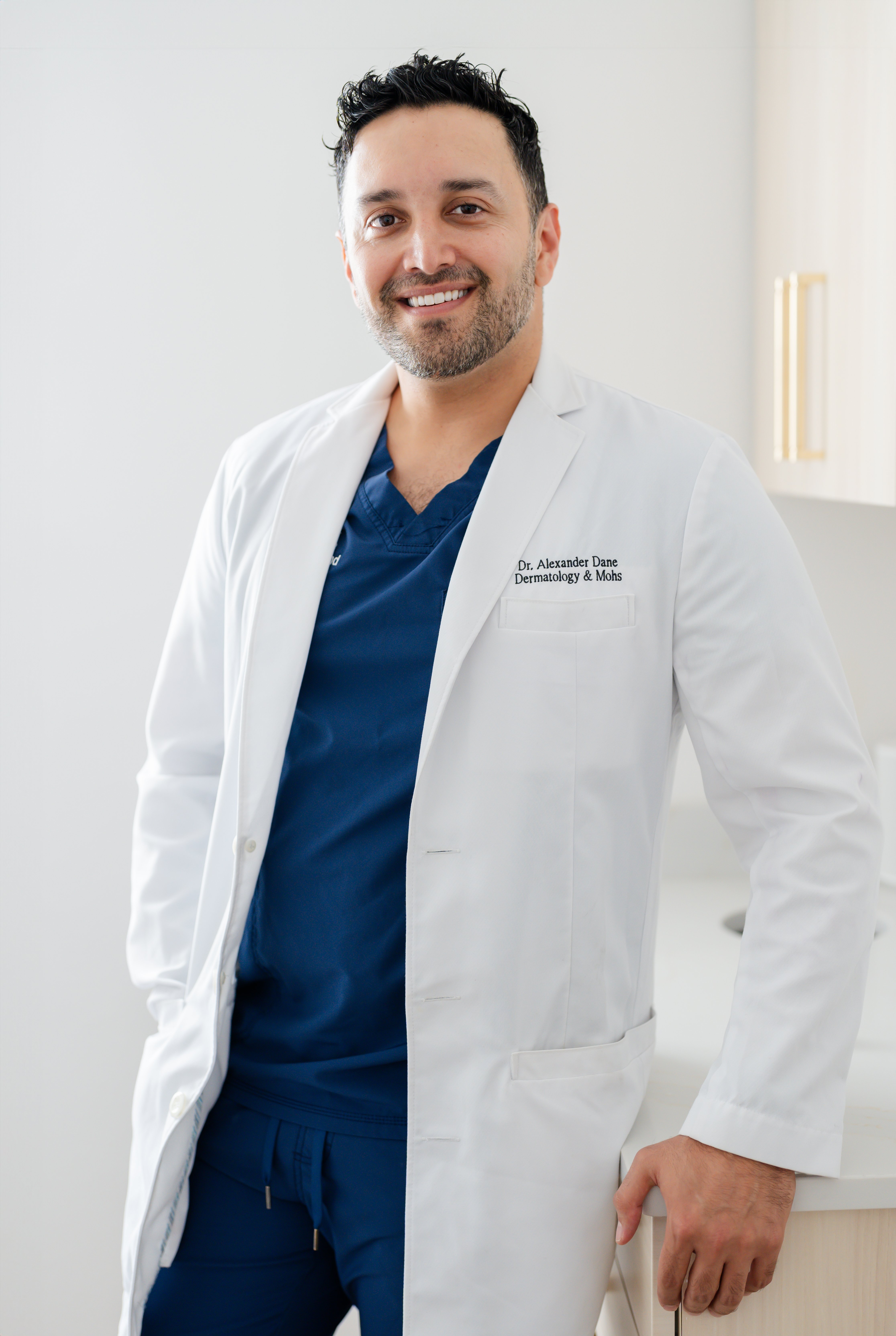
Dr. Dane
Double Board-Certified Dermatologist and Facial Cosmetic Surgeon providing advanced minimal-scar excision and cosmetic-surgery reconstruction for complex growths.




Frequently Asked.
How do I know if a growth is benign?
Only a board-certified dermatologist can determine if a growth is benign through clinical exam, dermatoscopy, and biopsy when indicated.
Is removal covered by insurance?
Removal of growths that are symptomatic (painful, bleeding, snagging) or suspicious is typically covered. Purely cosmetic removals may be out-of-pocket.
Will the growth come back?
Complete surgical removal has very low recurrence rates. Seborrheic keratoses can develop in new locations but don't recur at the same site after removal.
What is the recovery time?
Most patients return to activity immediately. Suture removal is typically in 7 to 14 days.
MODERN DERMATOLOGY: SOUTH TAMPA'S GROWTH REMOVAL SPECIALISTS
Board-certified dermatology in the heart of South Tampa. Accepting new patients.
Schedule Now