
Key Facts
Melasma: At a Glance
What is Melasma?
- A chronic hormonal and UV-driven pigmentation disorder involving activated melanocytes and dermal melanophages.
Who gets Melasma?
- Predominantly women aged 20–50, especially during pregnancy ("mask of pregnancy"), while on oral contraceptives, or in those with darker skin types.
What are the symptoms of Melasma?
- Symmetric brown patches on the cheeks, forehead, upper lip, and chin that darken with sun exposure.
How do you treat Melasma?
- Strict sun protection, prescription lightening agents (hydroquinone, tranexamic acid, cysteamine), chemical peels, microneedling with tranexamic acid, and gentle laser or light devices used cautiously in darker skin.
How long does Melasma take to improve?
- Gradual lightening over 8–12 weeks; melasma typically requires lifelong maintenance because it relapses with any UV exposure.
When should I see a dermatologist for Melasma?
- If over-the-counter lightening products are not helping or if patches are darkening. Professional treatment prevents rebound hyperpigmentation.
Melasma.
Melasma is a complex pigmentary disorder driven by UV exposure, hormones, and heat. In Florida's high-UV environment, it requires a sophisticated, multi-layered treatment strategy.

The Pigment Puzzle.
Melasma creates symmetric, brown-to-gray patches on the cheeks, forehead, and upper lip. Unlike simple sun spots, melasma involves overactive melanocytes that are triggered by UV light, hormonal fluctuations, and even visible light and heat. This makes it one of the most challenging conditions in dermatology to manage long-term.
Topical Therapy
Prescription combination creams targeting melanin production at multiple enzymatic pathways for visible lightening.
Sun Protection
The single most important factor. We prescribe iron-oxide tinted sunscreens that block both UV and visible light triggers.
Procedural Support
Carefully selected superficial peels and low-energy laser passes when topical therapy plateaus. Aggressive procedures are avoided.
Meet Your Specialists.

Dr. Grob
Founder & Dermatologist specializing in the diagnosis and management of complex inflammatory skin conditions.
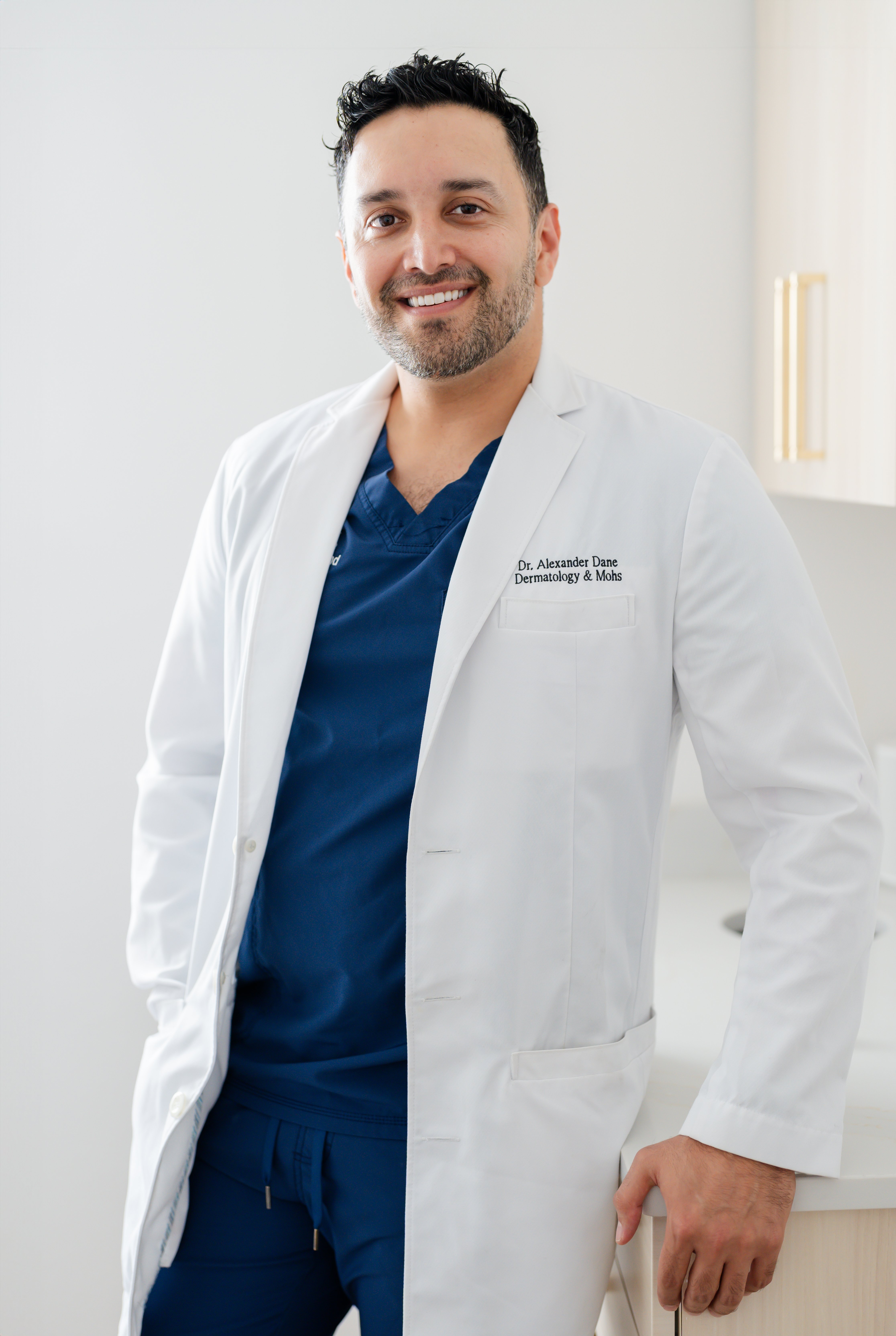
Dr. Dane
Double Board-Certified Dermatologist and Facial Cosmetic Surgeon providing expert diagnostics and advanced treatment for complex skin conditions.




Frequently Asked.
Can melasma be cured?
Melasma is a chronic, relapsing condition. It can be significantly improved and controlled, but requires ongoing management and strict sun protection.
Does birth control cause melasma?
Hormonal contraceptives can trigger or worsen melasma in predisposed individuals. We discuss hormonal factors during your consultation.
Why does my melasma come back?
Melasma melanocytes are permanently sensitized. Any UV exposure, heat, or hormonal change can reactivate them. Maintenance therapy is essential.
Is laser treatment effective for melasma?
Laser must be used with extreme caution for melasma. Aggressive treatment can cause rebound hyperpigmentation. We use low-energy approaches only when appropriate.
MODERN DERMATOLOGY: SOUTH TAMPA'S MELASMA SPECIALISTS
Board-certified dermatology in the heart of South Tampa. Accepting new patients.
Schedule NowReferences
Further Reading
This page is for informational purposes and is not a substitute for a medical evaluation by a board-certified dermatologist. If you have concerns about your skin, please schedule a consultation.