
Key Facts
Psoriasis: At a Glance
What is Psoriasis?
- A systemic T-cell-mediated autoimmune disease that accelerates keratinocyte turnover and drives inflammatory plaques on the skin and scalp.
Who gets Psoriasis?
- About 3% of U.S. adults. Onset is bimodal in the 20s and again in the 50s; it is strongly hereditary.
What are the symptoms of Psoriasis?
- Thick red plaques with silvery scale on elbows, knees, scalp, and lower back; nail pitting; joint pain in psoriatic arthritis.
How do you treat Psoriasis?
- Prescription topicals (steroids, vitamin D analogs, calcineurin inhibitors), narrow-band UVB phototherapy, oral systemics, and advanced biologics targeting IL-17, IL-23, and TNF-alpha pathways.
How long does Psoriasis take to improve?
- Topicals improve plaques within 2–6 weeks; biologics often produce near-complete clearance within 3–4 months.
When should I see a dermatologist for Psoriasis?
- If you have persistent scaly plaques, nail changes, or joint pain — early treatment prevents joint damage.
Psoriasis
Management.
Psoriasis is a chronic autoimmune condition that requires sophisticated immune modulation, not just topical management. At Modern Dermatology, we offer the full spectrum of treatment from topicals to biologics.

Beyond the Skin.
Psoriasis is not just a skin disease—it is a systemic inflammatory condition associated with psoriatic arthritis, cardiovascular disease, and metabolic syndrome. Our board-certified dermatologists manage psoriasis as a whole-body condition, monitoring for comorbidities while achieving clear or near-clear skin.
Plaque Psoriasis
The most common form. Thick, red, scaly patches on the elbows, knees, scalp, and lower back. Responds well to targeted therapy.
Guttate Psoriasis
Small, droplet-shaped lesions often triggered by streptococcal infection. Common in children and young adults.
Inverse Psoriasis
Smooth, red patches in skin folds (armpits, groin, under breasts). Often misdiagnosed as fungal infection.
Meet Your Specialists.

Dr. Grob
Founder & Dermatologist specializing in the diagnosis and management of complex inflammatory skin conditions.
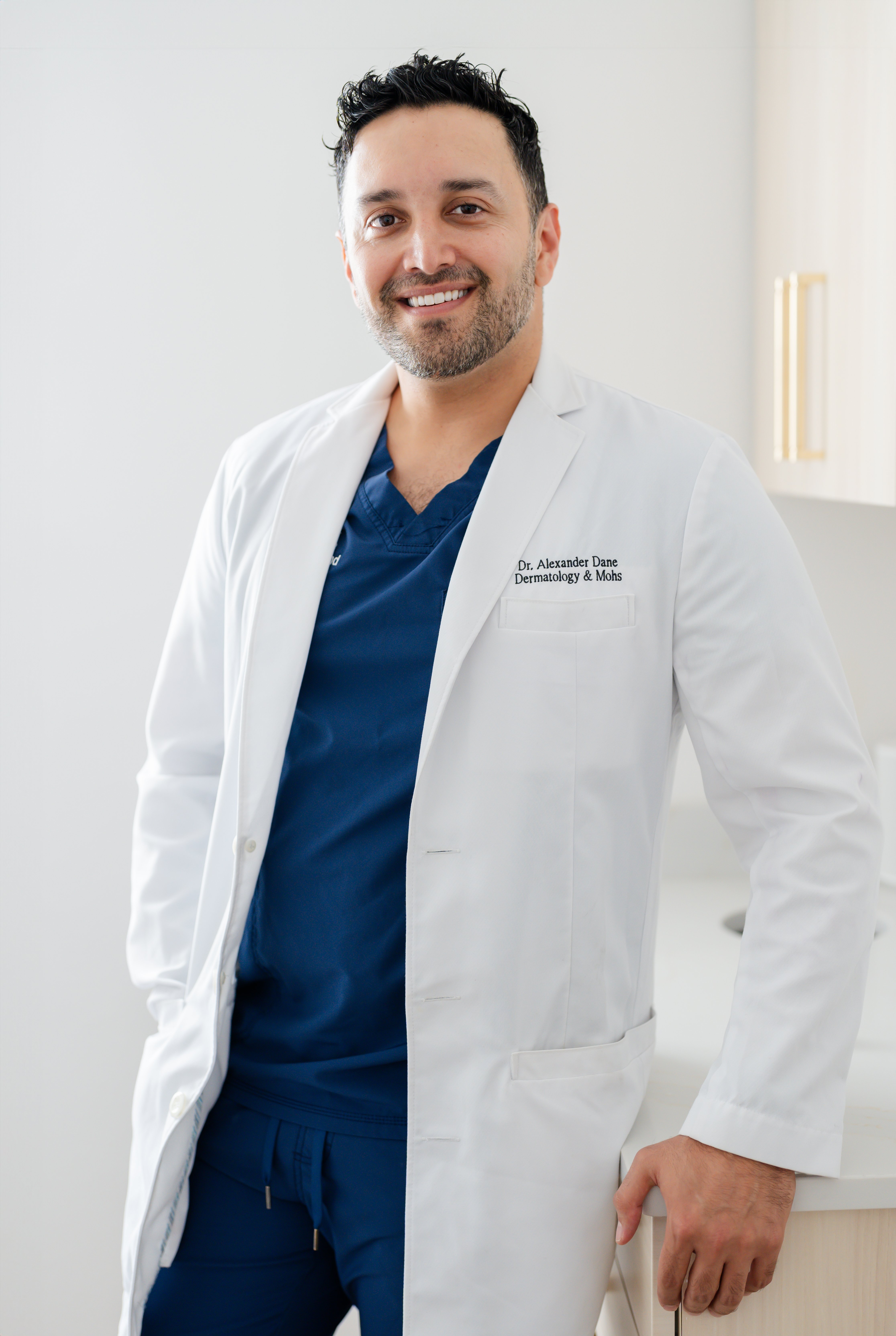
Dr. Dane
Double Board-Certified Dermatologist and Facial Cosmetic Surgeon providing expert diagnostics and advanced treatment for complex skin conditions.




Frequently Asked.
Is psoriasis curable?
Psoriasis is a chronic condition, but with modern therapies it can be effectively controlled. Many patients achieve clear or near-clear skin with biologic treatment.
What are biologic medications?
Biologics are targeted injectable medications that block specific immune pathways driving psoriasis. They offer the highest clearance rates with favorable safety profiles.
Can psoriasis affect my joints?
Yes. Up to 30% of psoriasis patients develop psoriatic arthritis. Early treatment can prevent joint damage.
Is psoriasis contagious?
No. Psoriasis is an autoimmune condition. It cannot be spread through touch or contact.
MODERN DERMATOLOGY: SOUTH TAMPA'S PSORIASIS SPECIALISTS
Board-certified dermatology in the heart of South Tampa. Accepting new patients.
Schedule NowReferences
Further Reading
This page is for informational purposes and is not a substitute for a medical evaluation by a board-certified dermatologist. If you have concerns about your skin, please schedule a consultation.