
Key Facts
Rosacea: At a Glance
What is Rosacea?
- A chronic relapsing inflammatory condition of the central face driven by vascular, inflammatory, and neurocutaneous dysregulation.
Who gets Rosacea?
- Adults aged 30–60, most commonly fair-skinned individuals of Celtic or Northern European descent, though it affects all skin tones.
What are the symptoms of Rosacea?
- Facial redness, visible blood vessels (telangiectasias), acne-like bumps, burning or stinging, and ocular irritation.
How do you treat Rosacea?
- Topical ivermectin, azelaic acid, metronidazole, oral doxycycline at anti-inflammatory doses, vascular (pulsed-dye or IPL) laser for persistent redness, trigger identification, and medical-grade skincare.
How long does Rosacea take to improve?
- Topicals take 4–8 weeks; vascular laser shows results after 1–3 sessions. Long-term maintenance is required.
When should I see a dermatologist for Rosacea?
- If flushing, redness, or bumps are worsening, persist despite skincare, or are being mistaken for acne.
Rosacea
Management.
Rosacea is a chronic inflammatory condition that requires long-term clinical management, not just a cream. At Modern Dermatology, we build personalized treatment architectures that address flushing, redness, and breakouts at their root.

Understanding Your Triggers.
In the high-UV, high-humidity climate of South Tampa, rosacea flares are common and often misdiagnosed as acne or allergies. Our board-certified dermatologists conduct a thorough clinical assessment to classify your rosacea subtype and identify your unique environmental and dietary triggers.
Erythematotelangiectatic
Persistent facial redness and visible blood vessels. Managed with topicals and vascular laser treatment.
Papulopustular
Acne-like breakouts with redness. Often misdiagnosed. Requires specific rosacea-targeted therapies.
Phymatous
Skin thickening, often on the nose (rhinophyma). Advanced cases may require surgical or laser intervention.
Meet Your Specialists.

Dr. Grob
Founder & Dermatologist specializing in the diagnosis and management of complex inflammatory skin conditions.
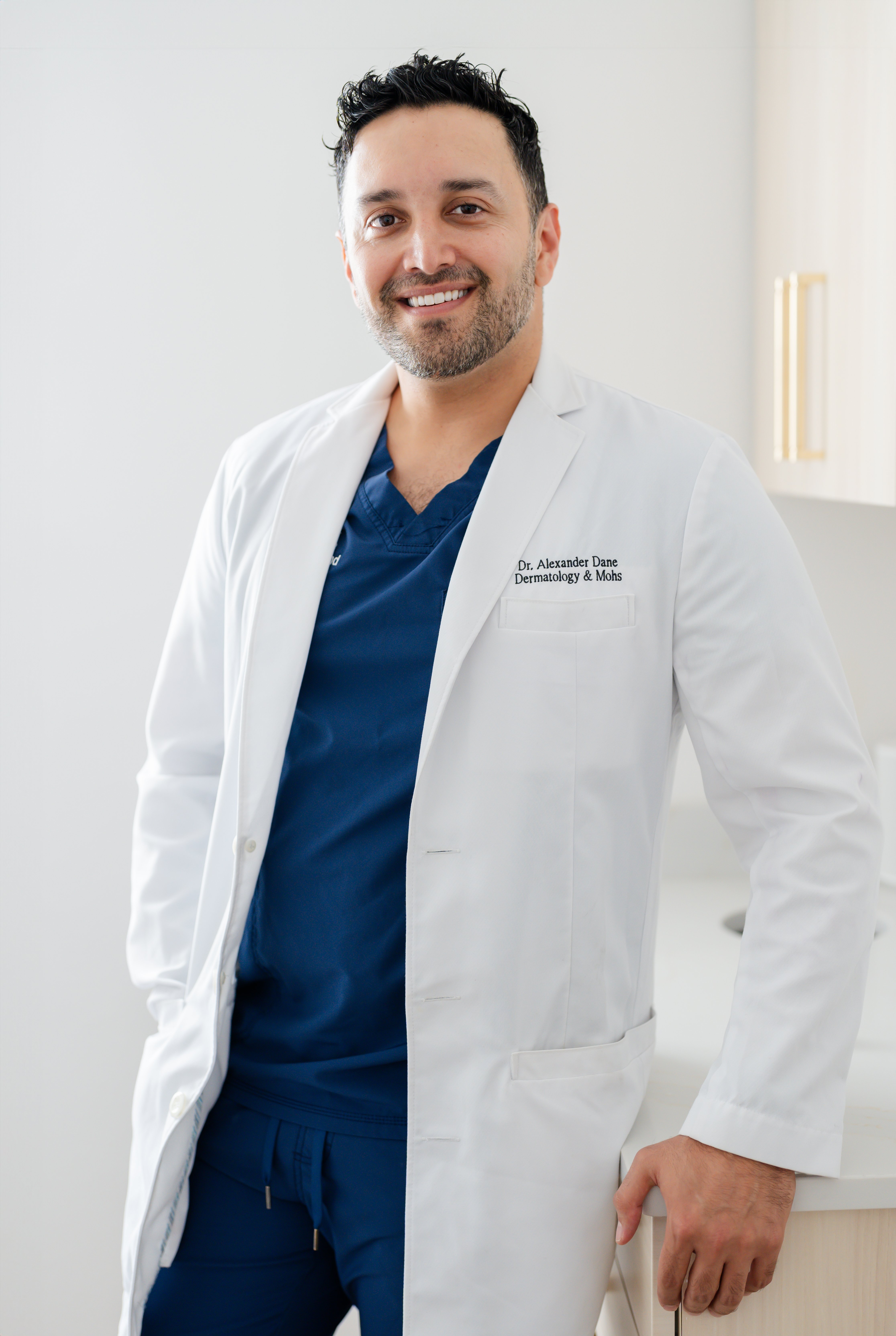
Dr. Dane
Double Board-Certified Dermatologist and Facial Cosmetic Surgeon providing expert diagnostics and advanced treatment for complex skin conditions.




Frequently Asked.
Is rosacea curable?
Rosacea is a chronic condition that can be effectively controlled with the right treatment plan. The goal is long-term remission and flare prevention.
What triggers rosacea?
Common triggers include sun exposure, heat, alcohol, spicy food, stress, and certain skincare products. We help identify your specific triggers.
Can rosacea be mistaken for acne?
Yes, and this is common. Papulopustular rosacea looks similar to acne but requires different treatment. A board-certified dermatologist can distinguish them clinically.
Do you offer laser treatment for rosacea?
Yes. Vascular laser therapy is highly effective for reducing persistent redness and visible blood vessels associated with rosacea.
MODERN DERMATOLOGY: SOUTH TAMPA'S ROSACEA EXPERTS
Board-certified dermatology in the heart of South Tampa. Accepting new patients.
Schedule NowReferences
Further Reading
This page is for informational purposes and is not a substitute for a medical evaluation by a board-certified dermatologist. If you have concerns about your skin, please schedule a consultation.